The Builder’s Guide to AI, LLMs & Foundation Models: Free vs. Paid, Prompt Mastery, and Production Project Setup
A comprehensive architectural guide explaining the differences between AI, LLMs, and Foundation Models, comparing free open-weights vs. paid APIs, mastering context engineering, and setting up a production-ready AI project.

Building software with Artificial Intelligence has shifted from speculative experimentation to core infrastructure engineering. Yet, beneath the hype lies confusion: What actually differentiates an AI Model from a Large Language Model (LLM)? When should you self-host open-source models versus paying for cloud APIs? And how should a production application be architected to leverage AI reliably without runaway latency, costs, or hallucinations?
In this comprehensive architectural guide, we will break down the fundamental concepts, compare the economics and trade-offs of free vs. paid models, master modern context engineering, and walk through an end-to-end project setup blueprint.
1. Fundamentals: AI vs. Models vs. LLMs vs. Foundation Models
Before writing a single line of code, let's establish precise, non-marketing definitions.
┌────────────────────────────────────────────────────────────────────────┐
│ Artificial Intelligence (AI)                                           │
│ (The overarching science of building systems that perform cognitive tasks)│
│  ┌───────────────────────────────────────────────────────────────────┐  │
│  │ Machine Learning (ML)                                             │  │
│  │ (Algorithms learning statistical patterns from data)              │  │
│  │  ┌──────────────────────────────────────────────────────────────┐ │  │
│  │  │ Deep Learning & Neural Networks                              │ │  │
│  │  │ (Multi-layered networks learning hierarchical representations)│ │ │
│  │  │  ┌─────────────────────────────────────────────────────────┐  │ │ │
│  │  │  │ Foundation Models                                       │  │ │ │
│  │  │  │ (Massive multimodal base weights adaptable to tasks)    │  │ │ │
│  │  │  │  ┌────────────────────────────────────────────────────┐ │  │ │ │
│  │  │  │  │ Large Language Models (LLMs)                       │ │  │ │ │
│  │  │  │  │ (Transformer-based autoregressive text generation) │ │  │ │ │
│  │  │  │  └────────────────────────────────────────────────────┘ │  │ │ │
│  │  │  └─────────────────────────────────────────────────────────┘  │ │ │
│  │  └──────────────────────────────────────────────────────────────┘ │  │
│  └───────────────────────────────────────────────────────────────────┘  │
└────────────────────────────────────────────────────────────────────────┘
What is an "AI Model"?
An AI Model is a mathematical function parameterized by learned numerical weights (matrices). It maps an input tensor $X$ through successive computational layers to generate an output tensor $Y$. Unlike traditional software where humans write deterministic if/else rules, an AI model learns its internal decision boundaries from millions or billions of examples.
What is an LLM (Large Language Model)?
An LLM is a deep neural network specifically designed to process, reason over, and generate sequential human language and code. Built predominantly on the Transformer architecture (introduced by Vaswani et al. in 2017), an LLM operates through next-token prediction:
$$P(w{t} \mid w{1}, w{2}, \dots, w{t-1}) = \text{Softmax}\left(\frac{QK^T}{\sqrt{d_k}}\right)V$$
- Tokenization: Text is converted into discrete subword integer IDs (tokens).
- Embeddings & Positional Vectors: Tokens are projected into high-dimensional geometric spaces where semantic relationships are captured.
- Self-Attention: The model weighs every token against every other token in the prompt, understanding context, syntax, and nuanced intent.
- Autoregressive Sampling: The model selects subsequent tokens one by one based on probability distributions tuned by parameters like temperature and Top-P.
What is a Foundation Model?
A Foundation Model is a large-scale base model trained on vast, multimodal datasets (text, code, images, audio, video) that can be adapted to thousands of specialized downstream tasks—from writing software and extracting structured data to analyzing medical imaging and driving robotics.
2. Free vs. Paid Models: The True Engineering Trade-Offs
One of the first architectural decisions in any AI project is choosing between Open-Source / Self-Hosted Models (often referred to as "Free") and Managed Commercial APIs ("Paid").
The "Free" Landscape: Open-Weights & Local Inference
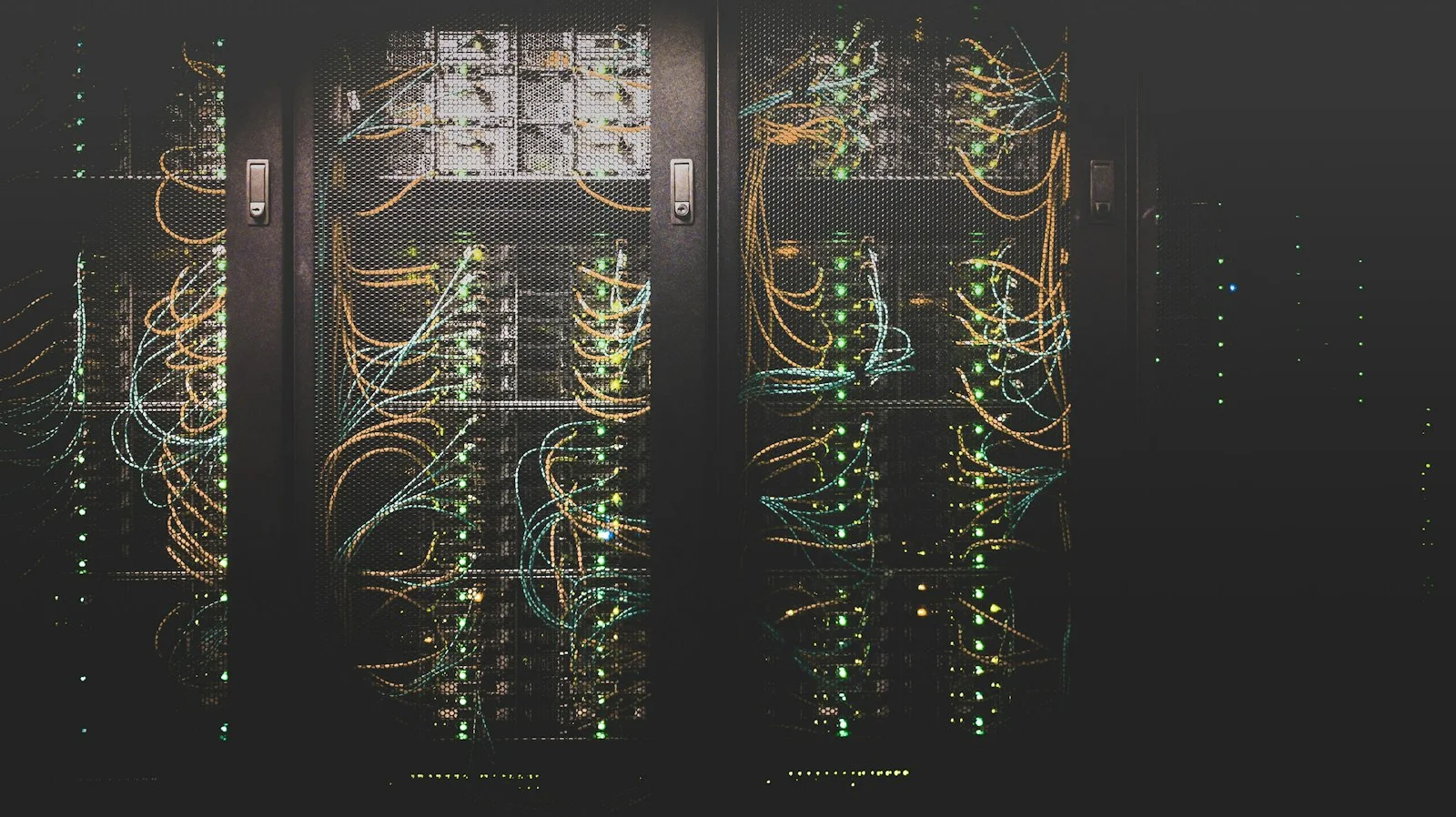
Open-weights models (such as Meta Llama 3.3, DeepSeek-R1 / V3, Mistral, Qwen 2.5, and Google Gemma 2) are freely downloadable. You can run them on your laptop via tools like Ollama and llama.cpp, or serve them in production clusters using vLLM and TGI (Text Generation Inference).
- Hardware & VRAM Realities: "Free" software does not mean free compute. A quantized 8B model requires ~6GB–8GB of GPU VRAM; a 70B model requires 40GB+ (at least two RTX 3090/4090s or an A100/H100 cloud instance).
- When Open-Weights Win:
- Zero Data Leakage / Privacy: Highly sensitive healthcare, financial, or proprietary IP data that cannot leave your VPC.
- High-Throughput Fixed Costs: When processing tens of millions of tokens daily where a dedicated GPU instance costs less than API token meters.
- Fine-Tuning & Custom Weights: Adapting low-rank adapters (LoRA) on custom domain vocabularies.
The "Paid" Landscape: Managed Frontier APIs
Frontier model providers (Anthropic Claude 3.7, OpenAI GPT-4.5 / o3-mini, Google Gemini 2.0) provide managed API endpoints billed on a pay-per-token basis (input tokens, output tokens, and cached tokens).
- Zero Infrastructure Overhead: No GPU provisioning, cold-start latency management, or CUDA driver crashes.
- Superior Reasoning: Frontier models excel at complex reasoning, deep multi-turn planning, tool calling, and structured code generation.
- Prompt Caching: Modern APIs offer 50%–90% cost discounts on repetitive system prompts and static context through automated KV-cache reuse.
Comprehensive Comparison Matrix
| Dimension | Open-Source / Local (Ollama, vLLM, Llama) | Managed Frontier APIs (Claude, OpenAI, Gemini) | | :--- | :--- | :--- | | Upfront Cost | $0 software license | Pay-as-you-go per token | | Compute Cost | GPU hardware / cloud server costs | Zero infrastructure cost | | Data Privacy | 100% on-premise; no data egress | Governed by vendor Data Processing Agreements (DPAs) | | Reasoning Capability| Very good (8B–70B), exceptional in top MoE | Frontier state-of-the-art (o3-mini, Claude 3.7 Sonnet) | | Context Windows | 8k to 128k tokens (VRAM heavy) | 128k to 2 Million+ tokens | | Maintenance | High (scaling, queuing, quantizations) | Zero (HTTP API calls) |
3. Mastering Prompt Engineering: Moving to Context Engineering
Prompting is not "chatting with a bot"—in software engineering, it is context engineering. Your prompt is the runtime configuration that directs the model's probabilistic output into deterministic execution.
The 5-Layer Prompt Architecture
Every production prompt should follow a structured 5-layer hierarchy:
# 1. PERSONA & BOUNDARIES
You are a Principal Software Architect reviewing a database migration PR.
Your goal is to detect concurrency hazards, locking risks, and missing indexes.

# 2. CONTEXT & GROUNDING
Database Engine: PostgreSQL 16
Connection Pooler: PgBouncer (Transaction mode, max 50 pool size)
ORM: Prisma 6

# 3. SCHEMA & CONTRACTS
Target table structure:
CREATE TABLE "page_views" ( "id" TEXT PRIMARY KEY, "path" TEXT NOT NULL, "createdAt" TIMESTAMP WITH TIME ZONE DEFAULT NOW() ); CREATE INDEX "page_views_path_idx" ON "page_views"("path");
# 4. FEW-SHOT EXEMPLARS
Example Input: Adding a column with a non-constant default on a 10M-row table.
Example Output: {"risk": "HIGH", "reason": "Exclusive table lock during table rewrite", "recommendation": "Add column as NULL, backfill in batches, then set NOT NULL with constraint."}

# 5. STRICT OUTPUT CONSTRAINTS
Respond strictly with valid JSON conforming to the requested schema.
Do not include conversational preamble or markdown codeblocks.
Key Techniques for Deterministic Output
- XML / Markdown Delimiters: Wrap dynamic inputs in
<user_input>or### CONTEXTblocks to eliminate prompt injection risks. - Chain-of-Thought (CoT) Scratchpads: Instruct the model to analyze edge cases in a
<thinking>block before outputting final JSON or code. - Structured Outputs / JSON Mode: Use model-native JSON Schema enforcement (e.g. OpenAI Structured Outputs, Anthropic Tool-Use constraints, or Zod schemas).
4. How a Project Should Be Set Up for AI: The Production Blueprint
Building an AI-enabled application requires a clean, decoupled architecture. Never scatter raw fetch('https://api.openai.com/...') calls inside your UI components or controllers.

Recommended Project Layout
src/
├── ai/
│   ├── client.ts              # Unified provider abstraction (OpenAI / Anthropic / Ollama)
│   ├── config.ts              # Model configurations, temperature, token limits
│   ├── prompts/               # Version-controlled prompt templates
│   │   ├── analyze-code.ts
│   │   └── summarize.ts
│   ├── schemas/               # Zod validation schemas for structured outputs
│   │   ├── audit.schema.ts
│   │   └── summary.schema.ts
│   ├── streaming/             # Server-Sent Events (SSE) streaming helpers
│   ├── cache/                 # Semantic & Redis response caching
│   └── telemetry/             # Token usage, latency, and cost tracking
1. Multi-Provider Client Abstraction
Use a unified client layer (such as the Vercel AI SDK or a lightweight custom adapter) so you can switch between local Ollama instances in development and Claude/OpenAI in production without rewriting application logic:
// src/ai/client.ts
import { anthropic } from '@ai-sdk/anthropic';
import { openai } from '@ai-sdk/openai';
import { ollama } from 'ollama-ai-provider';

export function getLanguageModel(tier: 'fast' | 'reasoning' | 'local' = 'fast') {
  if (process.env.NODE_ENV === 'development' && tier === 'local') {
    return ollama('llama3.3:8b');
  }
  if (tier === 'reasoning') {
    return anthropic('claude-3-7-sonnet-20250219');
  }
  return openai('gpt-4o-mini');
}
2. Type-Safe Structured Generation with Zod
Never rely on regex parsing of AI text responses. Mandate strict schema validation:
// src/ai/services/code-analyzer.ts
import { generateObject } from 'ai';
import { z } from 'zod';
import { getLanguageModel } from '../client';

const CodeReviewSchema = z.object({
  score: z.number().min(0).max(100),
  summary: z.string(),
  vulnerabilities: z.array(
    z.object({
      severity: z.enum(['LOW', 'MEDIUM', 'HIGH', 'CRITICAL']),
      line: z.number().optional(),
      description: z.string(),
      fix: z.string(),
    }),
  ),
});

export async function analyzePullRequest(codeDiff: string) {
  const result = await generateObject({
    model: getLanguageModel('reasoning'),
    schema: CodeReviewSchema,
    system: 'You are an automated security and performance code auditor.',
    prompt: `Review the following diff for security and concurrency vulnerabilities:\n\n${codeDiff}`,
  });

  // result.object is guaranteed to be type-safe CodeReviewSchema
  return result.object;
}
3. Low-Latency Streaming Architecture
For user-facing interfaces, always stream responses using Server-Sent Events (SSE) to reduce perceived Time-to-First-Token (TTFT) from 4+ seconds to under 300ms:
// apps/web/app/api/generate/route.ts
import { streamText } from 'ai';
import { getLanguageModel } from '@/ai/client';

export async function POST(req: Request) {
  const { prompt } = await req.json();

  const result = streamText({
    model: getLanguageModel('fast'),
    system: 'You are a technical writing assistant.',
    prompt,
  });

  return result.toDataStreamResponse();
}
4. Caching & Cost Protection
- Exact & Semantic Caching: Cache common queries in Redis using a SHA-256 hash of
(model + prompt + temperature)to avoid re-running identical prompts. - Circuit Breakers & Rate Limits: Implement user-level token quotas (e.g. 100,000 tokens/user/month) and exponential backoff retry policies.
5. Architectural Checklist for Builders
When launching an AI-powered product:
- [x] Separate Prompt Logic: Store prompts in dedicated template modules with semantic versioning.
- [x] Enforce Zod / Schema Contracts: Validate every model output at the boundary before writing to your database.
- [x] Stream by Default: Use SSE / streaming responses for all interactive human-facing features.
- [x] Leverage Prompt Caching: Keep static system instructions at the top of your prompt to maximize KV-cache discounts.
- [x] Track Token Telemetry: Log input/output token counts, execution duration, and estimated cost per request.
By treating AI as an integrated layer of your distributed system rather than a black-box novelty, you can build applications that are resilient, lightning-fast, and cost-effective.